
What Nigerian Investors Should Consider Before Choosing a Caribbean Citizenship by Investment Programme
AT
Caribbean Citizenship by Investment (CBI) programmes continue to attract international investors looking for greater global mobility, family security and long-term flexibility. For Nigerian investors considering this route, however, choosing a programme involves more than comparing the minimum investment amounts.
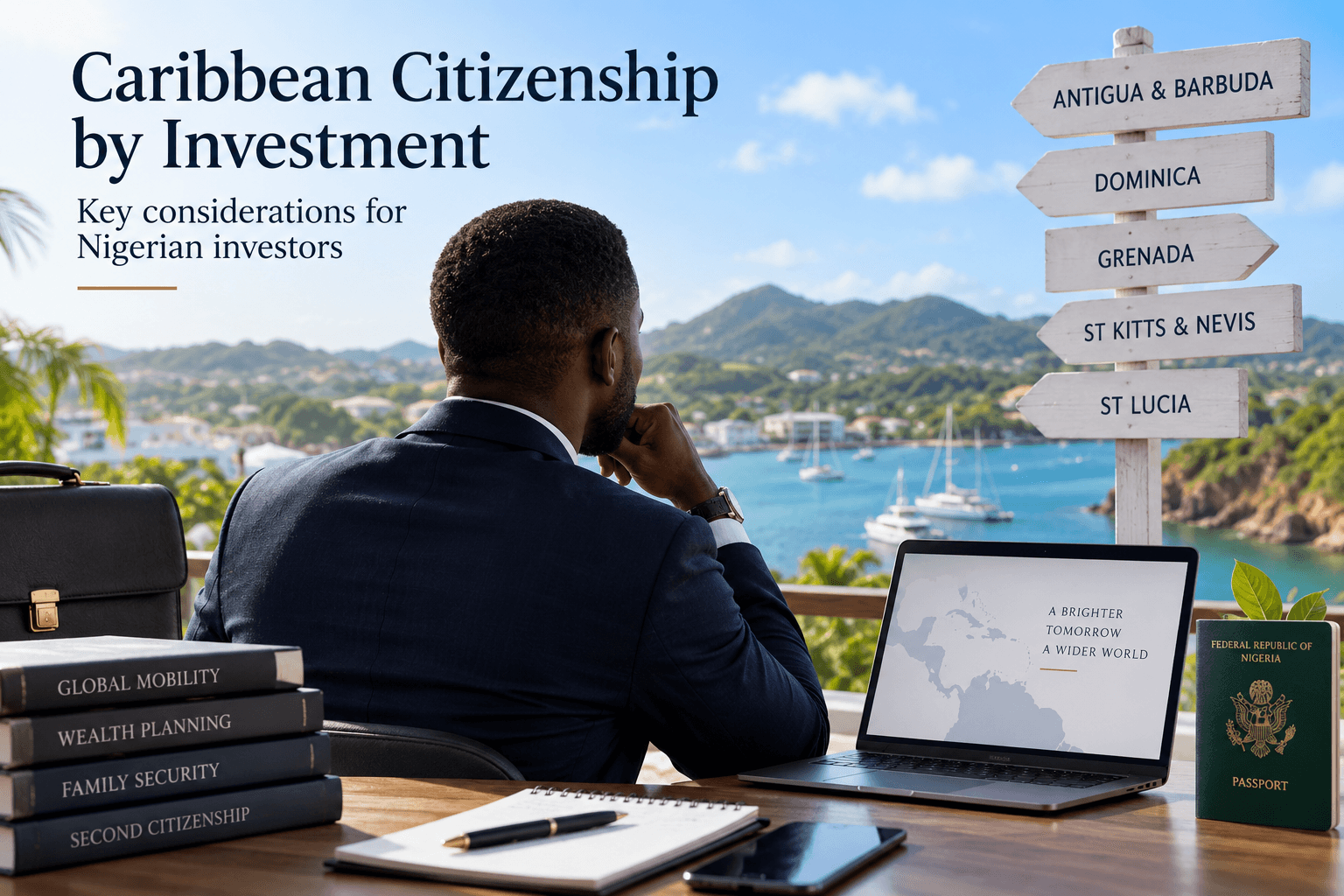
Antigua and Barbuda, Dominica, Grenada, St Kitts and Nevis, and St Lucia each offer established Citizenship by Investment programmes, but their costs, investment routes and requirements differ. Understanding these differences can help investors identify the programme that best suits their circumstances.
Look Beyond the Minimum Investment
The advertised minimum investment is an obvious starting point, but it does not necessarily represent the total cost of obtaining citizenship.
Government fees, due diligence charges, processing costs and fees for additional family members can significantly affect the final amount. This becomes particularly important for families, as a programme that appears less expensive for a single applicant may not offer the same cost advantage for a larger application.
Comparing the estimated total cost for your specific family structure provides a much more useful picture.
Consider Your Family Structure
Family eligibility is another important consideration. Depending on the programme and current regulations, applicants may be able to include a spouse, children, parents and certain other eligible dependants.
Nigerian investors applying with family members should therefore consider both eligibility and the additional costs associated with including them.
It is worth assessing the family as a whole before selecting a programme rather than choosing a country first and considering dependant requirements afterwards.

Understand the Due Diligence Requirements
Caribbean CBI programmes apply due diligence procedures to applicants, including checks relating to their background and source of funds.
Applicants should be prepared to provide documentation demonstrating how their investment funds were generated. For entrepreneurs and investors with income, businesses or assets across multiple jurisdictions, financial documentation can require careful preparation.
Understanding these requirements early can make it easier to assess whether an application is practical and what documentation will be needed.
Compare the Caribbean Programmes
There is no single Caribbean Citizenship by Investment programme that is right for every investor.
Antigua and Barbuda offers several qualifying investment routes and can be particularly relevant when evaluating options for a family application. Investors can explore the Antigua and Barbuda Citizenship by Investment Program in more detail before comparing it with the alternatives.
Grenada, Dominica, St Kitts and Nevis, and St Lucia each have their own programme structures, qualifying investments and requirements.
Rather than choosing based on one benefit, investors should compare the programmes across total cost, family eligibility, investment route, due diligence requirements, any applicable physical-presence conditions and their wider international objectives.
Choose Based on Your Priorities
The right Caribbean citizenship programme ultimately depends on what the investor wants to achieve.
An individual applicant focused on cost may reach a different conclusion from a family applying with several dependants. Similarly, an investor who prefers approved real estate may evaluate the available programmes differently from someone considering a contribution-based route.
For Nigerian investors, the most effective approach is therefore to compare the available programmes against personal circumstances and long-term objectives before committing to an investment.
Bridgegold helps international investors compare Caribbean Citizenship by Investment programmes and understand the requirements of each option before proceeding with an application.